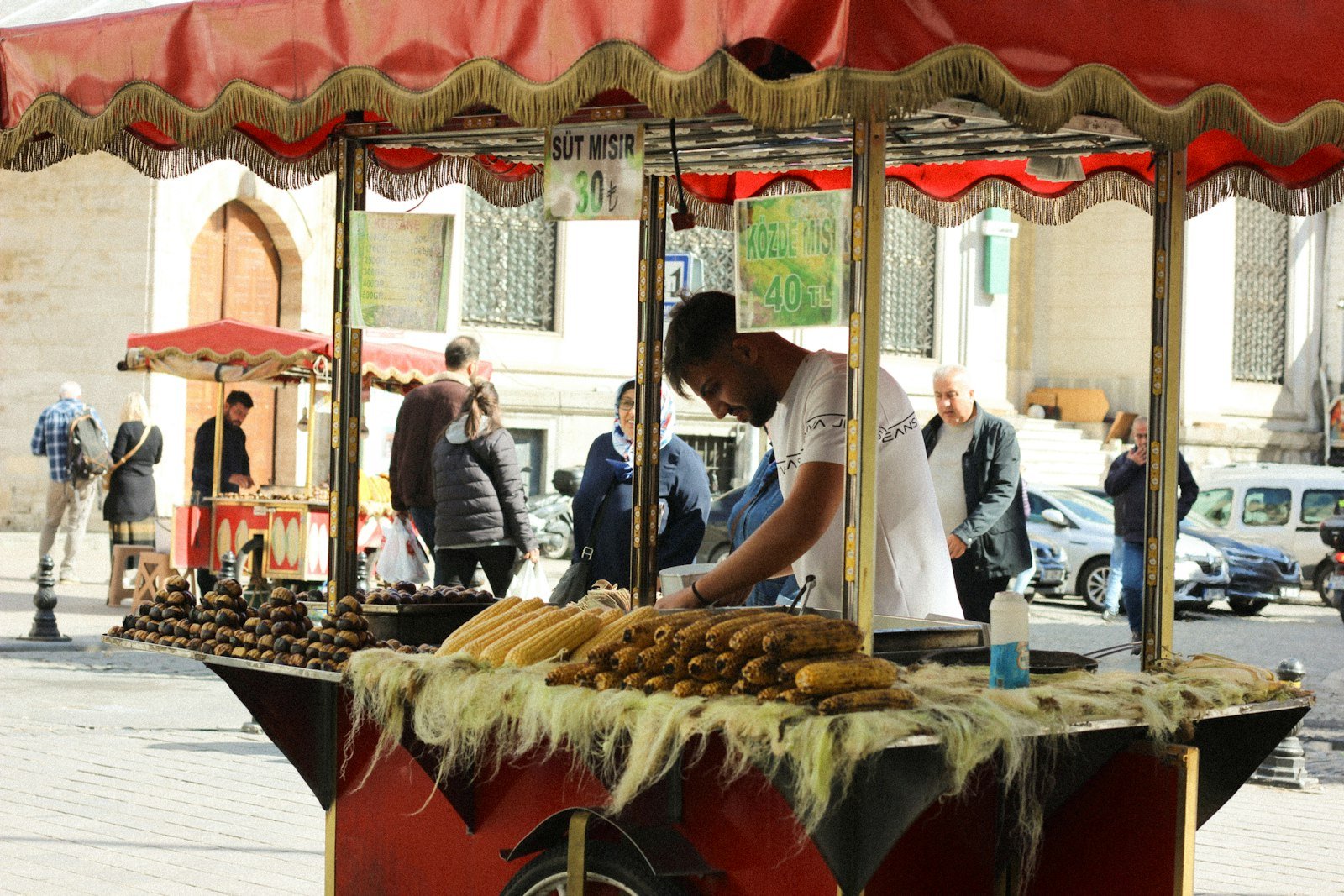
Walk down any Nairobi street as the sun starts to drop and you’ll find them: charcoal jikos glowing orange under metal grates, ears of maize turning slowly, smoke curling into the evening air. Mahindi choma is more than a snack. It is the soundtrack of a Kenyan evening, the rustle of a paper bag, the squeeze of a lemon, the first hot bite. This guide breaks down exactly how to roast sweet maize the Kenyan way, whether you are cooking on a sigiri at home or recreating the moment far from Nairobi.
What Mahindi Choma Really Means in Kenya
Mahindi means maize in Swahili, and choma means roasted or grilled. Unlike boiled corn (mahindi ya kuchemsha), mahindi choma is cooked dry over hot charcoal until the kernels caramelise, blister and pick up that distinct smoky edge. It is sold by vendors known as wamama wa mahindi, often grandmothers who have been working the same corner for decades. You’ll see them outside matatu stages, near schools at home time, and lining roads in towns from Kisumu to Mombasa.
For anyone moving between Ahmedabad and Nairobi, mahindi choma feels like a cousin to Indian bhutta. The technique is similar, but the maize is different and the finish is unmistakably Kenyan: a wedge of lemon, a dusting of pili pili, salt from the vendor’s tin.
Choosing the Right Cob: White Maize vs Sweet Corn
Most cooks get this wrong before the fire is even lit. Kenyan mahindi choma is almost always made with white field maize, not the yellow sweet corn you find in supermarkets abroad. White maize is starchier and has a more substantial chew. When it hits charcoal, the sugars caramelise without turning mushy.
What to look for at the market:
- Husk still slightly green: Fully dry husks mean the kernels are too hard.
- Kernels firm but dentable: Press a thumbnail into a kernel. A small dimple should form. No dimple means the cob is past its prime.
- No black tips: Dark tips suggest fungus.
- Heavy for its size: A heavy cob is full of moisture, which is what you want.
If only sweet yellow corn is available, the technique still works; reduce the cooking time and expect a sweeter, less chewy result.
The Charcoal Setup: Why Sigiri Beats a Gas Flame
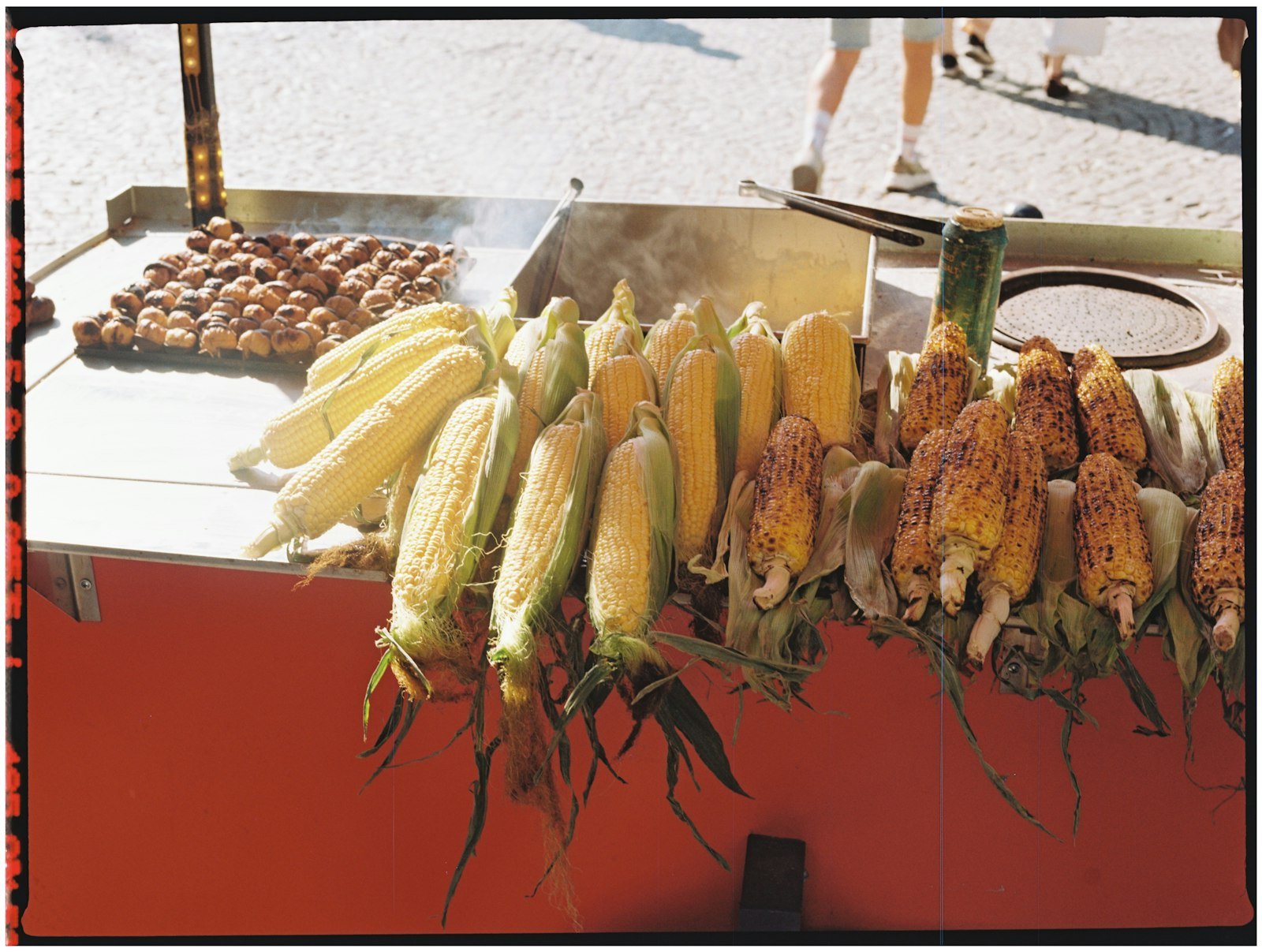
You cannot fake the flavour of a real sigiri. The slow, radiant heat of glowing charcoal is what gives mahindi choma its character. Gas grills run hot and cool in patches, leaving you with raw and burnt kernels on the same cob.
Here is the vendor setup, simplified for the home cook:
- Light a small mound of hardwood charcoal in a sigiri or kettle grill. Use natural lump charcoal if you can; briquettes work but burn cooler.
- Wait until the coals are coated with a fine grey ash and there are no visible flames. This usually takes 25 to 30 minutes.
- Spread the coals into an even bed. Place the metal grate about 10 to 15 centimetres above the embers.
- Test the heat with your hand: if you can hold your palm 10 cm above the grate for about four seconds, you are at the right temperature.
If you are using a jiko in a small kitchen, ventilate well. Vendors always cook outdoors for a reason.
The Roast: How to Get Perfect Char Without Drying It Out
Strip the husks and silk completely. Some Kenyan vendors leave the inner husk on for the first few minutes to gently steam the cob, then peel it away to finish over direct heat. Both methods work. Total cooking time is usually 12 to 18 minutes for a medium white maize cob.
- Place the cobs directly on the grate. Do not oil them, do not season them yet.
- Turn every two minutes. A quarter turn each time so all four sides get equal exposure.
- Listen. When the kernels start to pop softly and you hear a gentle crackle, you are about halfway there.
- Watch for blistering. The kernels should darken in patches, not turn uniformly black. Dark brown caramelisation with a few charred kernels is the goal.
- Press-test. Press a kernel with the back of a spoon. If it gives slightly and a milky liquid is gone, the cob is done.
Pull the cobs off, rest them for one minute, then move on to the most important step.
The Finish: Lemon, Pili Pili and Salt
This is what makes Kenyan mahindi choma different from corn anywhere else in the world. Right off the heat, vendors do this:
- Halve a fresh lemon. Dip the cut side into a saucer of fine salt mixed with crushed pili pili (red chilli) and a touch of paprika.
- Rub the lemon-salt-chilli mixture all over the hot cob. The lemon juice mingles with the smoke, the salt clings to the charred kernels, the chilli wakes everything up.
- Optional: a final pinch of dhania (coriander) or a chilli-tomato dip on the side.
Wrap the bottom of the cob in a piece of newspaper or banana leaf, and eat it standing up, the Kenyan way. For more on the spice traditions that shape this kind of street eating, see our guide to pilau masala and smokie pasua.
FAQs About Mahindi Choma
Why is Kenyan roasted maize so chewy compared to American sweet corn?
Kenyan vendors use white field maize, which has a higher starch content and a firmer kernel than sweet corn. The chew is intentional and culturally preferred.
Can I make mahindi choma without charcoal?
You can use a gas grill or even an open gas flame on a stovetop, but you will lose the smoky depth. A cast iron pan over high heat is a passable indoor substitute. Skip the oven; it dries the cob out.
Is mahindi choma healthy?
Yes, in moderation. A medium cob is roughly 100 to 130 calories, naturally low in fat, and a good source of fibre and antioxidants. The lemon-chilli finish adds vitamin C without piling on sodium.
Where in Nairobi can I find the best mahindi choma?
Westlands roundabout, the matatu stages along Tom Mboya Street, and the streets near Uhuru Park all have reliable vendors. Coastal towns like Mombasa serve a slightly sweeter version, sometimes brushed with coconut oil.
Mahindi Choma at Home: A Quick Recap
Pick firm white maize cobs. Light hardwood charcoal and let it ash over. Strip the husks. Roast directly on the grate, turning every two minutes for 12 to 18 minutes until charred in patches. Rub with a lemon half dipped in salt and pili pili. Eat hot. That is the whole secret, the same one passed down by every mama wa mahindi on a Nairobi street corner.
Maize is one of Kenya’s most important crops, supporting smallholder farmers across the Rift Valley and Western regions, as documented by the FAO in Kenya. Roasting it this way is a small, smoky tribute to the people who grow it. For more inspiration, browse Magical Kenya or grilling techniques on BBC Good Food. Serve a batch alongside ugali na sukuma wiki or after a plate of nyama choma for a full Kenyan evening.