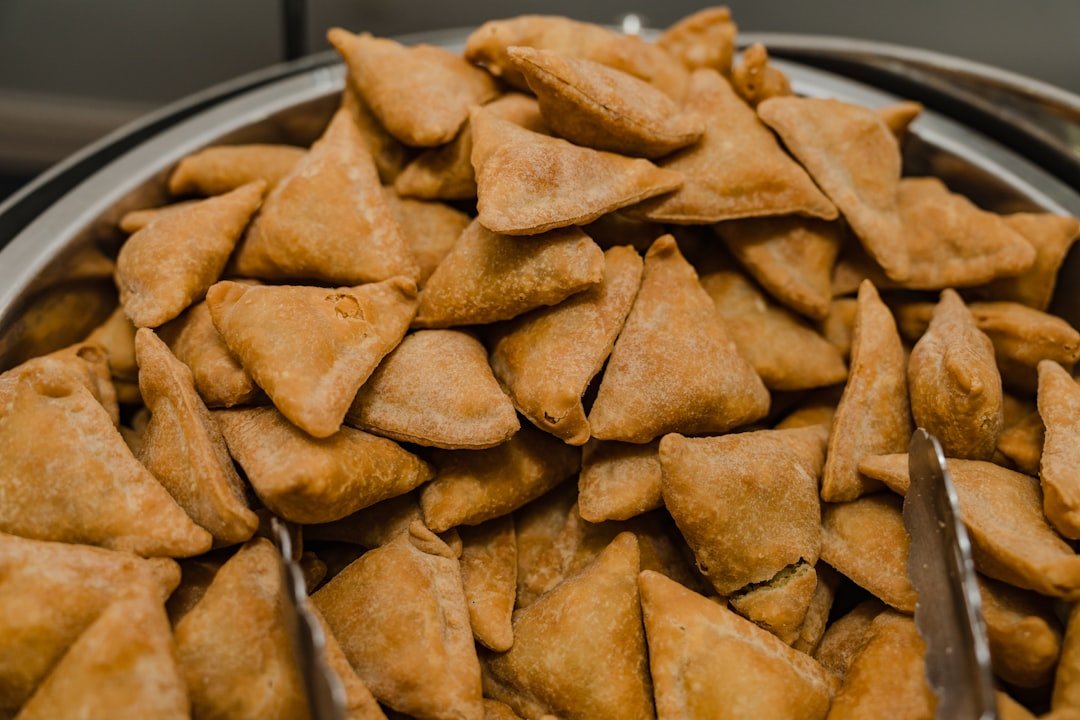
The golden crunch of a freshly fried Kenyan samosa recipe is something every Kenyan knows in their bones. Whether it’s teatime at home in Karen, a street vendor’s cart outside a Nairobi matatu stage, or a festive spread at a family harambee, the samosa — called sambusa in some communities — is Kenya’s most beloved snack. Triangular, crispy, and packed with aromatic spiced meat, it’s impossible to eat just one. In this recipe, we’re sharing exactly how to make it the authentic Kenyan way: from the dough to the deep-golden fry.
- Prep time: 30 minutes
- Cook time: 40 minutes
- Total time: 1 hour 10 minutes
- Servings: 20 samosas
- Difficulty: Intermediate
Ingredients for Authentic Kenyan Samosa
For the Samosa Dough (Mkate wa Samosa)
- 2 cups all-purpose flour (unga wa ngano)
- ½ tsp salt
- ½ tsp baking powder
- 2 tbsp vegetable oil
- ½ cup warm water (approximately — add gradually)
- Vegetable oil for deep frying
For the Spiced Minced Beef Filling (Mchuzi wa Nyama)
- 400 g minced beef (nyama ya ng’ombe iliyosagwa)
- 1 medium onion, finely diced
- 2 cloves garlic, minced
- 1 tsp fresh ginger, grated
- 1 green chilli (pilipili mbichi), finely chopped
- 1 tsp cumin seeds (bizari)
- 1 tsp ground coriander (giligilani)
- ½ tsp turmeric (manjano)
- ½ tsp black pepper
- Salt to taste
- Handful fresh coriander leaves (dhania), chopped
- 2 tbsp vegetable oil
The spice blend here shares its soul with the aromatic base used in our authentic Swahili pilau recipe — cumin, coriander, and ginger are the holy trinity of Kenyan meat cooking. For a deeper dive into how Kenyans use aromatics, see our guide to spicing up Kenyan cuisine.
How to Make Kenyan Samosa Step by Step
Step 1: Make the Dough
- In a large bowl, mix the flour, salt, and baking powder together.
- Add the vegetable oil and rub it in with your fingertips until the mixture resembles breadcrumbs.
- Gradually add warm water, mixing as you go, until a firm but pliable dough forms. It should not be sticky.
- Knead for 5 minutes until smooth. Cover with a damp cloth and rest for 20 minutes.
Chef’s tip: The samosa dough is firmer than our chapati dough — it needs to hold the fold under frying heat. Don’t add too much water.
Step 2: Cook the Spiced Filling
- Heat oil in a pan over medium heat. Add cumin seeds and let them sizzle for 30 seconds.
- Add the diced onion and fry until golden, about 5 minutes.
- Add garlic, ginger, and green chilli. Cook for 1 minute, stirring constantly.
- Add the minced beef, breaking it apart as it browns — about 8 minutes.
- Season with ground coriander, turmeric, black pepper, and salt. Stir well and cook for another 5 minutes.
- Remove from heat, stir in fresh dhania, and let the filling cool completely before wrapping. A hot filling tears the dough.
Step 3: Fold and Fry the Samosas
- Divide the rested dough into 10 equal balls. Roll each into a thin oval (about 2mm thick).
- Cut each oval in half to create two semi-circles. This gives you 20 wrappers total.
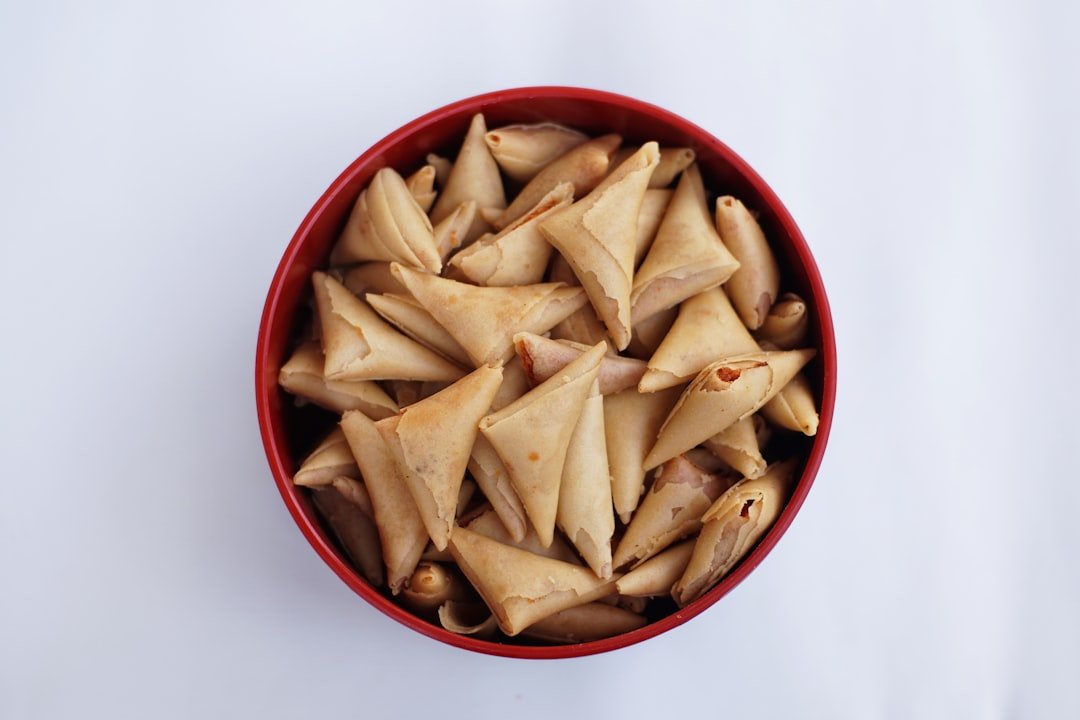
- Make a cone by bringing the two straight-edge corners of a semi-circle together and sealing with a little water.
- Fill the cone with 1 tablespoon of cooled filling. Don’t overfill — leave a small margin at the top.
- Seal the open edge by pressing firmly and folding inward to create the classic triangle shape. Pinch to secure all seams.
- Heat oil for deep frying to 170–180°C (340–356°F). A small piece of dough dropped in should sizzle and rise slowly.
- Fry in batches of 4–5, turning occasionally, for 4–5 minutes until golden brown all over.
- Drain on kitchen paper and serve hot.
Tips for Perfectly Crispy Kenyan Samosas
Getting that perfect golden crunch is where experience counts. Here’s what I’ve learned from years of making samosas in Nairobi and back in the UK:
- Cool the filling completely. Steam trapped inside from a warm filling causes the dough to soften and sometimes burst. Patience here pays off.
- Seal every seam firmly. Use a little water as “glue.” Any gap will let hot oil seep in and turn your samosa greasy.
- Fry low and slow. High heat browns the outside before the pastry is fully cooked. Medium heat (170°C) gives an even, crispy result.
- Don’t overcrowd the pan. Too many samosas drops the oil temperature and you get soggy rather than crisp.
- Make ahead: You can shape unfried samosas and refrigerate for up to 24 hours, or freeze for up to 1 month. Fry straight from frozen, adding 2 extra minutes.
Serving Suggestions and Variations
In Kenya, samosas are served with a squeeze of fresh lime juice and a side of kachumbari — the fresh tomato-onion-chilli salsa. At celebration meals and harambees, you’ll find a platter of samosas next to other Kenyan festive favourites like nyama choma and pilau.
Vegetarian version: Replace minced beef with a filling of boiled and spiced lentils (dengu), mashed potato with peas, or finely chopped cabbage and carrots. The dough and technique remain exactly the same.
Coastal variation: Along the Kenyan coast, samosas often include prawn (kamba) or tuna filling with a hint of coconut and tamarind — a Swahili culinary influence worth trying.
Sweet samosa (Mombasa style): A dessert version fills the pastry with a spiced sweetened coconut mixture and is served with chai. Ask any Mombasan — they’ll confirm it’s real.
Frequently Asked Questions
What is the difference between an Indian samosa and a Kenyan samosa?
The Kenyan samosa recipe uses a thinner, crispier pastry and is typically smaller than its Indian counterpart. The filling uses similar spices but is often simpler — minced beef, onion, coriander, and cumin — without potatoes in the meat version. Vegetarian variants are popular at the coast.
Can I bake Kenyan samosas instead of frying?
You can bake them at 200°C for 20–25 minutes, brushing with oil first, but the result is noticeably different — less crispy, a bit doughy. Traditional Kenyan samosas are deep-fried for that signature crunch. Shallow frying in a generous amount of oil is a reasonable compromise.
How do I stop my samosas from opening when frying?
Seal every seam with water and press firmly. Make sure the filling is cool and not overfilled. Let the shaped samosas rest for 5 minutes before frying — this helps the dough “set” at the seams.
What oil is best for frying samosas in Kenya?
Sunflower oil or neutral vegetable oil is standard in Kenyan kitchens. Avoid olive oil (wrong flavour profile, low smoke point) or coconut oil unless you specifically want that taste. The key is enough oil to submerge the samosas fully for even browning.
There’s a reason samosas have earned a permanent place on every Kenyan tea table and celebration spread — they’re deeply satisfying to make and even more satisfying to eat. Once you master the fold, you’ll be making batches for every gathering. Let us know in the comments how yours turned out!