Few things bring a Kenyan kitchen to life quite like the scent of chapati (cha-PAH-tee) sizzling on a hot pan. This beloved flatbread has earned its place at every table — from Sunday family dinners to festive celebrations. Made from simple pantry staples, the Kenyan chapati recipe delivers layers that pull apart beautifully, a slightly crisp exterior, and a tender, pillowy interior. Whether you pair it with githeri, nyama ya mbuzi, or a hearty stew, chapati turns any meal into something special. We have gathered everything you need to get it right on your very first roll.
The Story Behind Kenyan Chapati
Chapati arrived in East Africa through centuries of Indian Ocean trade, brought by South Asian merchants and settlers who made Kenya their home. Over time, it became thoroughly Kenyan — adapted to local tastes, cooked with local oils, and folded into local food culture with remarkable ease. Unlike the thinner Indian roti, the Kenyan version is deliberately layered: cooks roll the dough flat, spread oil across the surface, fold it, roll it again, and repeat. This lamination technique creates those signature spiral layers that have made Kenyan chapati famous across the continent.
Today, chapati is considered comfort food, celebration food, and everyday food simultaneously. You will find it at roadside joints in Nairobi street food stalls, served alongside supu ya ndizi (plantain soup) along the Coast, and stacked high at weddings and harambee (community fundraising) events throughout the country. According to the Food and Agriculture Organization, wheat flatbreads play a central nutritional role across Sub-Saharan Africa, and Kenya’s chapati tradition is a shining example.
Ingredients You Will Need
The beauty of this recipe lies in its simplicity. You likely already have everything in your kitchen.
- 3 cups all-purpose flour (unga wa ngano) — plus extra for dusting
- 1 teaspoon salt
- 1 teaspoon sugar — helps with browning and softness
- 3 tablespoons vegetable oil — for the dough, plus more for laminating
- 1 cup warm water — adjust as needed for a smooth, elastic dough
Some families add a small splash of milk for extra softness, or substitute part of the flour with whole wheat. Both are perfectly valid — cooking is a living tradition, not a fixed rule. BBC Good Food notes that a small amount of fat worked into flatbread dough is key to achieving a pliable texture that does not crack when folded.
Step-by-Step Kenyan Chapati Method
1. Mix and Knead the Dough
Combine flour, salt, and sugar in a large bowl. Add the oil and rub it through the flour until the mixture resembles coarse breadcrumbs — this coats the gluten strands and ensures a tender crumb. Gradually pour in the warm water, mixing as you go, until a shaggy dough comes together. Turn it out onto a lightly floured surface and knead firmly for 8–10 minutes until smooth and elastic. The dough should spring back gently when you press a finger into it.
Cover with a damp cloth and rest for at least 30 minutes. This is called kupumzisha unga (letting the flour rest) in Swahili, and it allows the gluten to relax so your chapati rolls out easily without springing back.
2. Divide and Laminate
Divide the rested dough into 8–10 equal balls. Working with one at a time, roll each ball into a thin circle roughly 20–22 cm in diameter. Brush the surface generously with oil, then roll the circle tightly into a cylinder (like a cigar). Coil the cylinder into a snail shape (konokono) and press it down gently. Roll the coiled piece out again into a round chapati. This two-roll method creates the layers.
3. Cook on the Pan (Jiko)
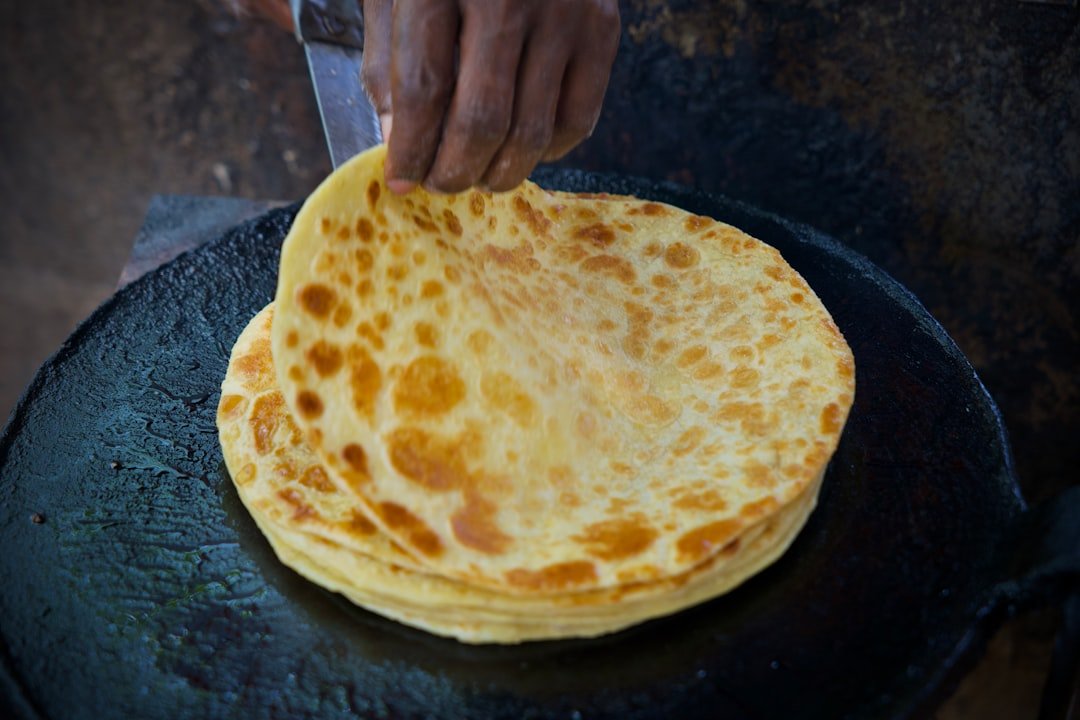
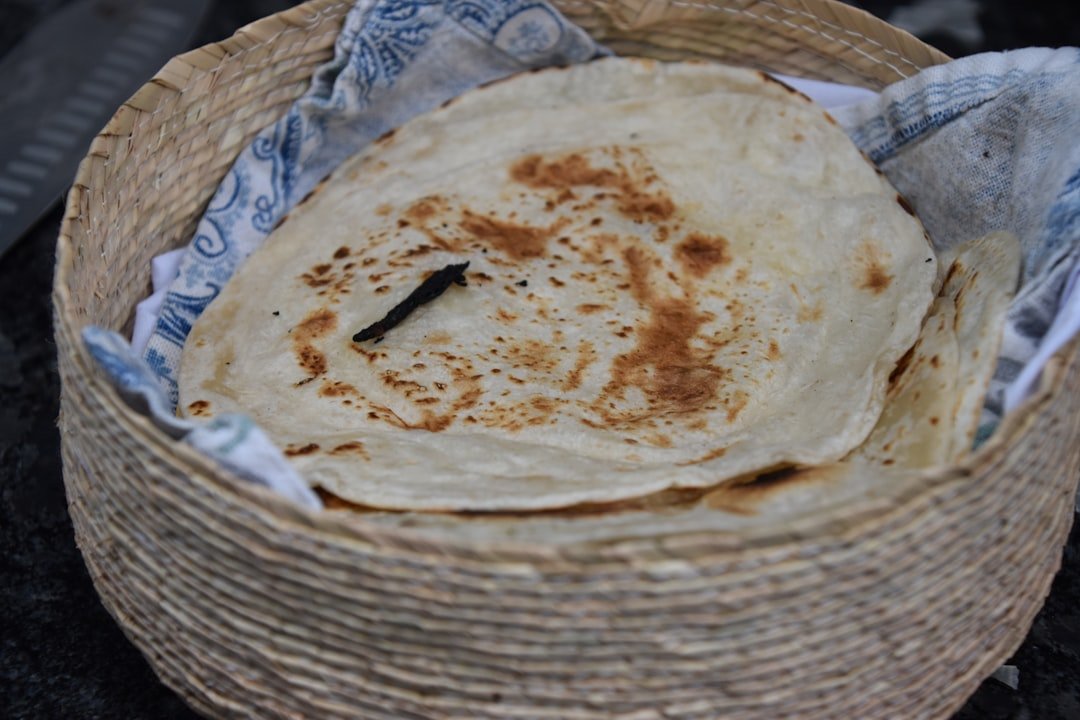
Heat a flat pan or jiko griddle over medium-high heat. No oil is needed at this stage — the laminating oil will do its job. Place a chapati on the dry hot pan. After about 60–90 seconds, you will see bubbles start to form. Flip it. Brush the top with a little oil, flip again, and brush the other side. Cook until both sides are golden with small charred spots and the chapati has puffed slightly. Repeat with the remaining dough, stacking finished chapati under a clean cloth to keep them soft and warm.
Tips for Perfect Layers Every Time
- Do not skip the rest: Underrested dough fights you on the rolling board and produces tough chapati.
- Roll thin: The thinner you roll, the better the layers separate during cooking.
- Medium-high heat: Too low and the chapati dries out before it puffs. Too high and it burns.
- Oil generously when laminating: This is the single biggest factor for flaky layers.
- Keep cooked chapati covered: Steam trapped under a cloth keeps them soft. Exposed chapati stiffens within minutes.
If your chapati is not developing layers, the fix is almost always in the lamination step. Watch experienced cooks from the Kenyan Coast and Central regions — both communities have mastered the art of layered chapati through generations of practice.
What to Serve with Kenyan Chapati
Chapati is one of Kenya’s most versatile accompaniments. Here are the classic pairings:
- Beans and stew: A hearty githeri or lentil stew is a staple weekday combination.
- Nyama choma: Grilled meat and chapati is a beloved weekend combination — read our nyama ya mbuzi guide for full details.
- Kachumbari: Our kachumbari recipe takes minutes to prepare.
- Chai: Explore our Kenyan tea guide for brewing tips.
- Eggs: Mayai na chapati (eggs with chapati) is the ultimate Kenyan breakfast — simple, filling, and deeply satisfying.
Frequently Asked Questions
Why is my Kenyan chapati hard and not soft?
Hard chapati usually results from overworked gluten, insufficient resting time, or cooking on too-low heat for too long. Make sure you rest the dough for at least 30 minutes, roll it thin, and cook on medium-high heat.
Can I make chapati dough ahead of time?
Yes. The dough keeps well in the refrigerator for up to 24 hours, wrapped tightly in cling film. Bring it to room temperature for 20–30 minutes before rolling. You can also freeze individual shaped (coiled) pieces and cook them directly from frozen.
Is Kenyan chapati the same as Indian chapati?
They share a name and ancestry but have evolved differently. Kenyan chapati is typically thicker, oilier, and deliberately layered through the coil-and-re-roll method. Indian roti and phulka are thinner, use less oil, and are not laminated in the same way.
What oil is best for making chapati?
Neutral vegetable oil or refined sunflower oil are traditional choices in Kenyan homes. Some cooks use ghee (siagi) for a richer flavour on special occasions. Avoid strongly flavoured oils like olive oil, which can alter the neutral taste of the bread.
Mastering the Kenyan chapati recipe is one of the most rewarding things you can do in the kitchen. The technique is straightforward once you understand the logic behind each step: rest for elasticity, oil for layers, heat for lift. Make a batch this weekend, pile them under a cloth, and watch them disappear faster than you can stack them. That is the real Kenyan chapati experience — shared, warm, and always just a little bit too good to stop at one.